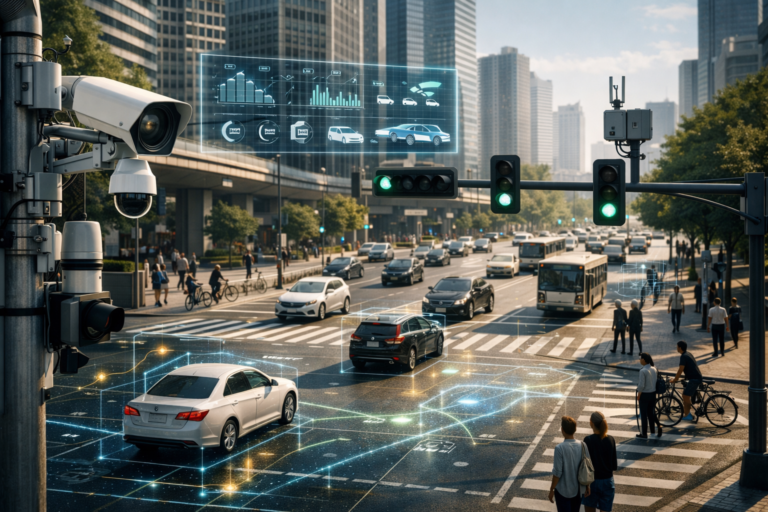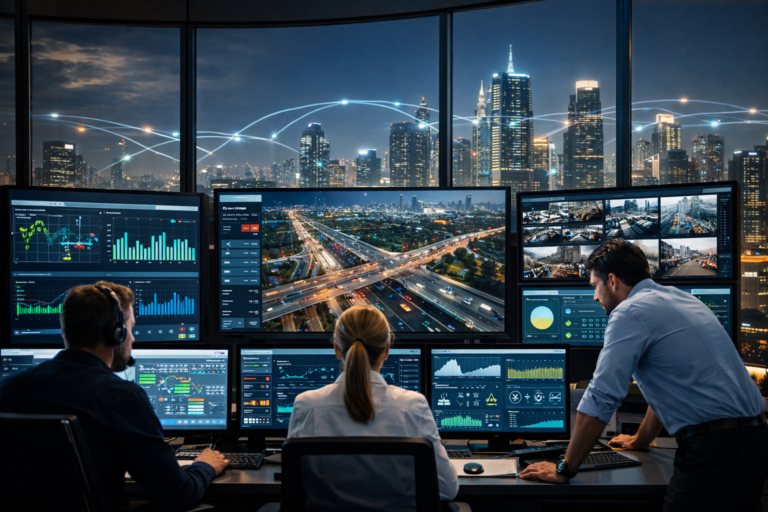

India’s CCTV market is moving from “record and rewind” to “detect, alert, verify, and report.” That shift changes how CCTV gets priced. You’re no longer just buying cameras and storage; you’re buying compute (to run models), integration (to ingest RTSP/ONVIF), operations (alerts + dashboards), and accountability (privacy + audit trails).
Two data points explain why pricing conversations are getting serious:
- Multiple research firms estimate India’s video surveillance market in the multi-billion USD range and growing strongly through 2030 (methodologies differ, direction is consistent).
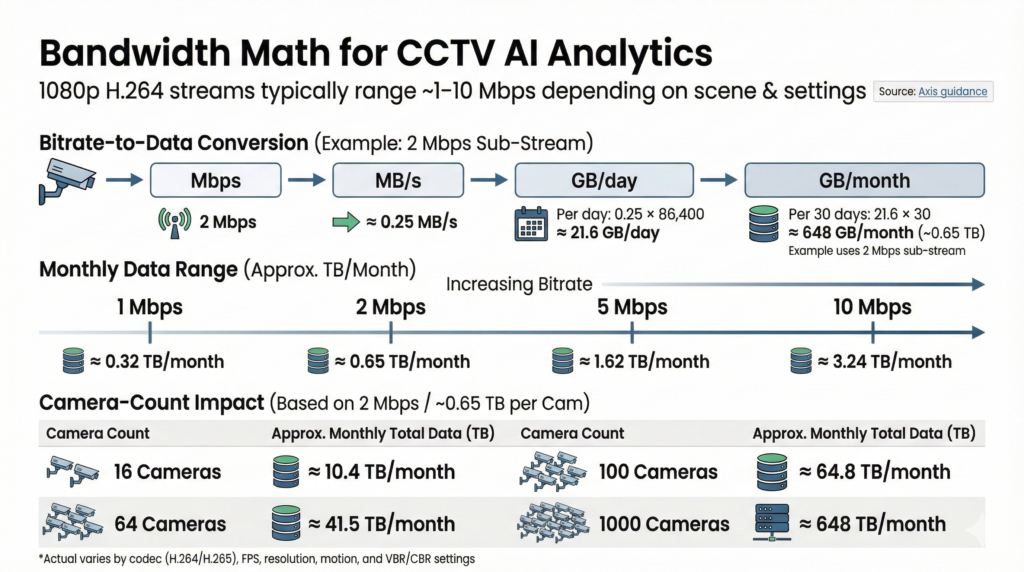
- Typical 1080p H.264 streams can range roughly 1 to 10 Mbps depending on scene and settings, which directly drives bandwidth and compute costs.
This guide gives you a practical, implementation-grade way to price AI analytics in India:
- Per-camera analytics pricing benchmarks (₹/camera/month)
- 16/32/64/100/1000-camera plan examples
- A clear model for CAPEX vs OPEX, plus what actually changes the bill
- FAQs, plus image ideas and a video summary script
Table of contents
First: what exactly are you paying for?
A CCTV AI analytics stack typically has 6 cost buckets:
- Video ingest
RTSP pulls, ONVIF discovery, authentication, stream health monitoring. - Decode and pre-processing
Turning compressed video into frames. This is a hidden cost driver at scale. - Model inference
Running Fire/Smoke, Intrusion, PPE, ANPR, Face Recognition, Shoplifting, etc. - Event pipeline
Rules, deduplication (avoid alert storms), severity, escalation, audit logs. - UX and reporting
Dashboards, search, incident timelines, daily/weekly compliance reports. - Deployment and support
Installation, calibration, model tuning, maintenance, SLA, upgrades.
That’s why two “₹500/camera/month” quotes can be completely different products.
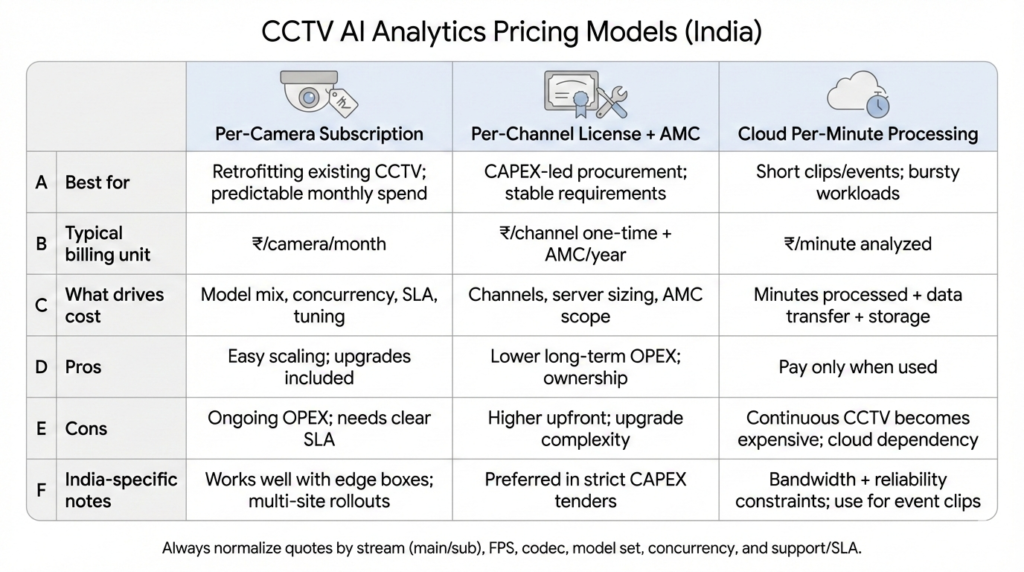
The 3 dominant pricing models in India
Model A: Per-camera subscription (most common)
You pay ₹/camera/month based on model complexity and support level.
Best when:
- You want predictable monthly spend
- You want upgrades and new analytics over time
- You’re retrofitting an existing CCTV system
Model B: Per-channel license + AMC
You pay a higher upfront ₹/channel (per camera channel) plus annual maintenance.
Best when:
- Procurement insists on CAPEX
- You have stable requirements and a strong internal IT team
Model C: Cloud “per minute processed” (rare for continuous CCTV in India)
You pay for video minutes analyzed. As a public reference point, AWS Rekognition Video shows per-minute pricing examples and tiers (for example, streaming events priced per minute; stored video analysis can be much higher depending on API).
Best when:
- You analyze short clips (events), not 24×7 continuous streams
- You’re okay with cloud dependency and data transfer realities
The pricing reality check: continuous cloud gets expensive fast
If you stream continuously to cloud for analytics, bandwidth becomes the tax.
A practical benchmark: Axis notes a typical 1080p/30fps H.264 stream can be around 1–10 Mbps depending on scene and settings.
Even if you run a conservative 2 Mbps sub-stream:
- 2 Mbps = 0.25 MB/s
- Daily data per camera = 0.25 × 86,400 = 21.6 GB/day
- Monthly (30 days) = 648 GB/camera/month
So:
- 16 cameras = ~10.4 TB/month
- 64 cameras = ~41.5 TB/month
- 100 cameras = ~64.8 TB/month
- 1000 cameras = ~648 TB/month
That’s why India deployments commonly prefer edge/on-prem analytics: keep video local, send only events, thumbnails, and metadata using edge-based CCTV AI analytics.
Also, if your analytics involves identifiable video (faces, plates), you should treat privacy obligations seriously; India’s DPDP Act is now the baseline framing for digital personal data handling.
Per-camera AI analytics pricing benchmarks (India)
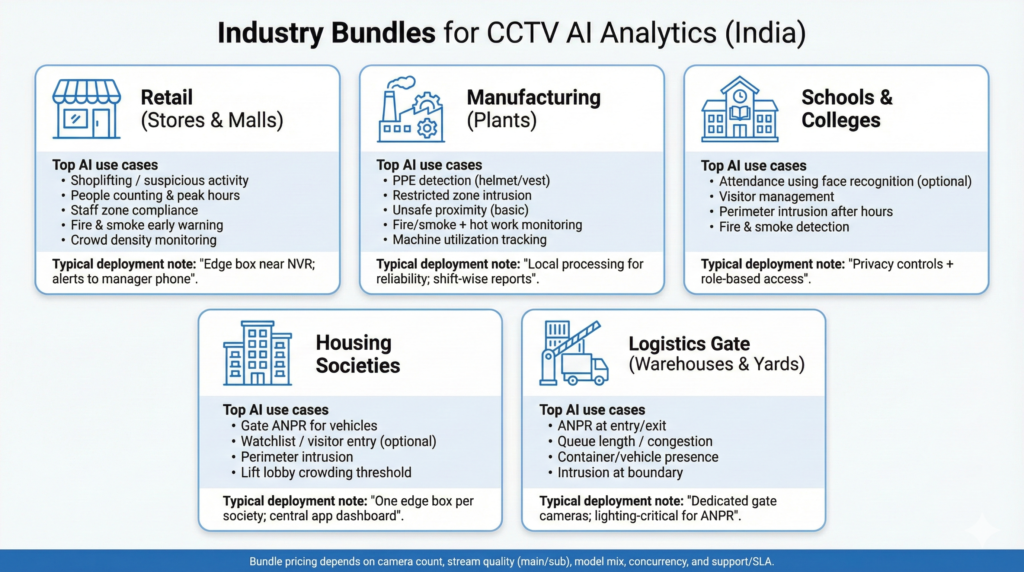
Below are practical “market reality” bands you’ll commonly see in India for serious, deployable analytics (not hobby demos). Actual quotes vary by accuracy expectations, environment, and support scope.
A) Entry analytics (operational monitoring)
- People/vehicle detection, intrusion line/zone, loitering (basic), crowd threshold
- Typical: ₹150–₹400 per camera/month
B) Safety and compliance analytics
- PPE detection, restricted zone violations, forklift-person proximity (basic), occupancy compliance
- Typical: ₹250–₹700 per camera/month
C) Fire and smoke detection
- Needs good camera placement and stable exposure; false positives drive tuning cost
- Typical: ₹250–₹800 per camera/month
D) ANPR (number plate recognition)
- Higher compute + requires correct angles/illumination; may need country/state formats
- Typical: ₹400–₹1,200 per camera/month
E) Face recognition (attendance/visitor watchlist)
- Enrollment workflows, liveness/anti-spoof (if included), database management, audit trails
- Typical: ₹500–₹1,500 per camera/month (plus one-time setup in many projects)
Think of pricing as complexity + risk + operational burden:
- “Intrusion on a boundary wall” is easier than “shoplifting in a crowded retail aisle.”
- “ANPR at a gated society” is easier than “ANPR at a high-speed industrial gate at night.”
Reference CAPEX numbers (to sanity-check your BoM)
These are not your project’s final prices, but useful anchors from commonly listed India pricing:
- 2MP IP cameras can be in the ~₹2,300 range for some models
- 16-channel NVR entries are often listed around ~₹7,000–₹12,000 depending on variant
- 16-port PoE switch examples range widely: ~₹8,299 for certain SMB models, and higher for enterprise gear
- 8TB surveillance HDD can be ~₹21,950 in some listings
Why this matters: if a vendor quote implies AI analytics but ignores network + storage realities, the project usually fails in month 2.
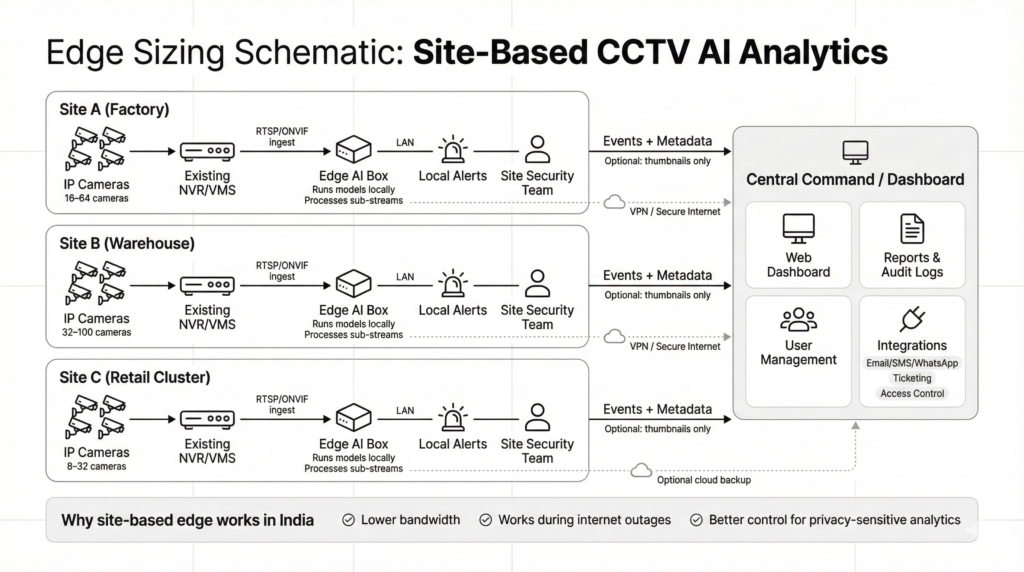
The practical decision: edge box sizing (what drives it)
In real deployments, you size edge compute using:
- How many concurrent streams (not total cameras)
- Which stream (main vs sub-stream)
- FPS and resolution
- Which models (face and ANPR cost more than fire/smoke)
- Alert philosophy (continuous analytics vs event-triggered analytics)
A practical sizing heuristic buyers use:
- For operational models (intrusion, PPE, smoke), one edge box often covers a “site block” of 16–32 cameras
- For heavy models (ANPR, face recognition), assume fewer streams per box unless you buy higher compute
16/32/64/100/1000 camera plan examples (India)
To make this concrete, many buyers use an AI CCTV ROI calculator to estimate savings before finalizing camera counts and analytics scope.
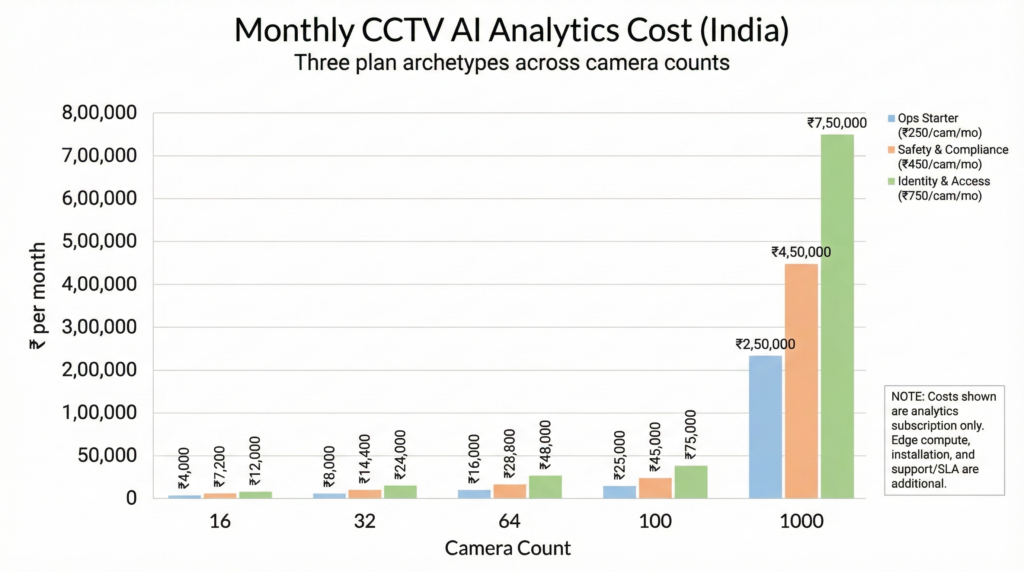
Plan 1: Ops Starter (high ROI, low friction)
Use cases: Intrusion, loitering, people/vehicle detection, fire/smoke
Typical analytics fee: ₹250/camera/month
Plan 2: Safety & Compliance (manufacturing, warehouses, hospitals)
Use cases: PPE, restricted zones, crowding thresholds, fire/smoke
Typical analytics fee: ₹450/camera/month
Plan 3: Identity & Access (gates, attendance, visitor control)
Use cases: Face recognition (selected cameras) + ANPR (gates) + intrusion elsewhere
Typical blended fee: ₹750/camera/month (because a subset are “heavy” cameras)
Now the math (monthly analytics cost only):
| Camera Count | Ops Starter @ ₹250 | Safety @ ₹450 | Identity+Access @ ₹750 |
| 16 | ₹4,000/month | ₹7,200/month | ₹12,000/month |
| 32 | ₹8,000/month | ₹14,400/month | ₹24,000/month |
| 64 | ₹16,000/month | ₹28,800/month | ₹48,000/month |
| 100 | ₹25,000/month | ₹45,000/month | ₹75,000/month |
| 1000 | ₹2,50,000/month | ₹4,50,000/month | ₹7,50,000/month |
Add CAPEX: how many edge boxes?
A realistic deployment approach (not a rule) is:
- 16 cameras: 1 edge box (single site)
- 32 cameras: 1–2 edge boxes
- 64 cameras: 2–4 edge boxes
- 100 cameras: 4–6 edge boxes or a small on-prem GPU server
- 1000 cameras: distributed by site (example: 20 sites × 50 cameras), with per-site edge + central dashboard
Why distributed wins in India:
- network reliability
- privacy and governance for identifiable video (faces, plates)
- predictable scaling
“AI CCTV system cost” full TCO template (use this for vendor comparisons)
When a vendor gives you a total number, force it into this structure:
One-time (CAPEX)
- Edge compute (edge boxes or on-prem GPU server)
- Network upgrades (PoE switches, VLAN readiness)
- Storage (if you keep higher-res streams locally)
- Installation, calibration, SOP creation
Recurring (OPEX)
- Analytics subscription (₹/camera/month)
- Support and SLA
- Cloud hosting (only for dashboard/metadata, ideally not raw video)
- Model upgrades, new use cases, periodic re-tuning
Hidden costs (what causes surprise overruns)
- Camera repositioning (especially for face/ANPR accuracy)
- Lighting improvements at gates
- False-positive handling time (operations cost)
- Integration work with access control, HRMS, alarms, SMS/WhatsApp, etc.
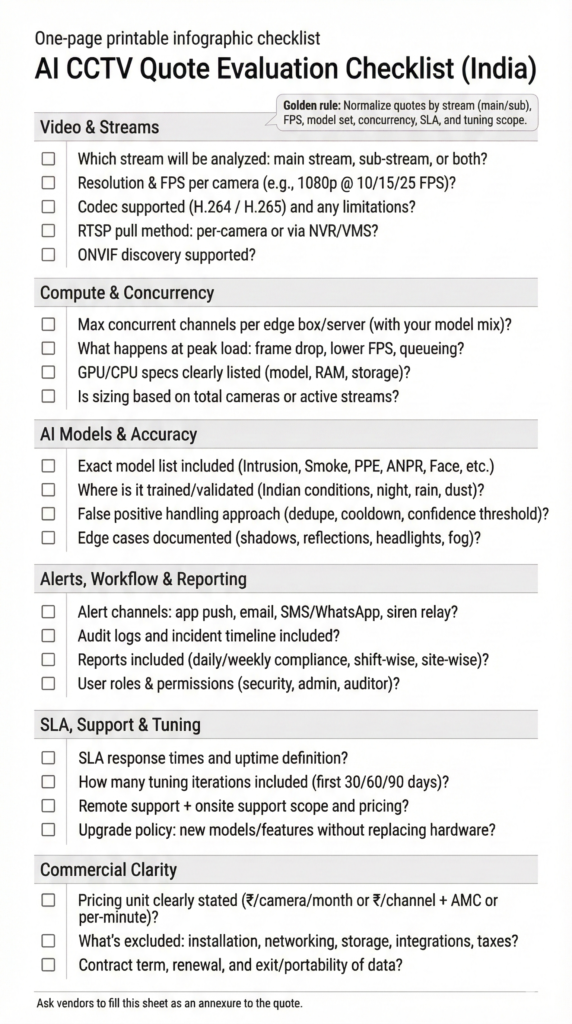
Procurement checklists: what to demand in the quote
Ask every vendor to specify:
- Which stream they will analyze (main or sub-stream)
- Max FPS processed per camera
- Max concurrent channels per compute node
- False positive expectations and tuning approach
- Offline operation behavior (what happens if internet is down)
- Data retention policy for thumbnails/metadata
- Upgrade path: adding models later without replacing hardware
If a vendor cannot answer these, their “per camera price” is not comparable.