
Introduction
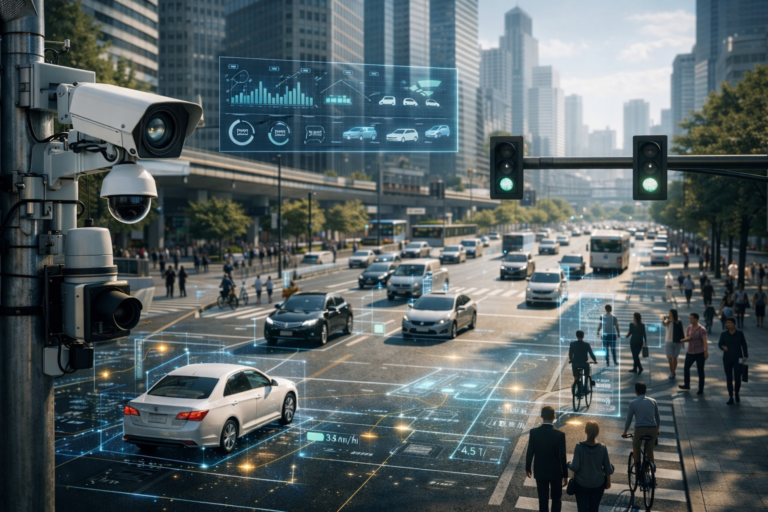
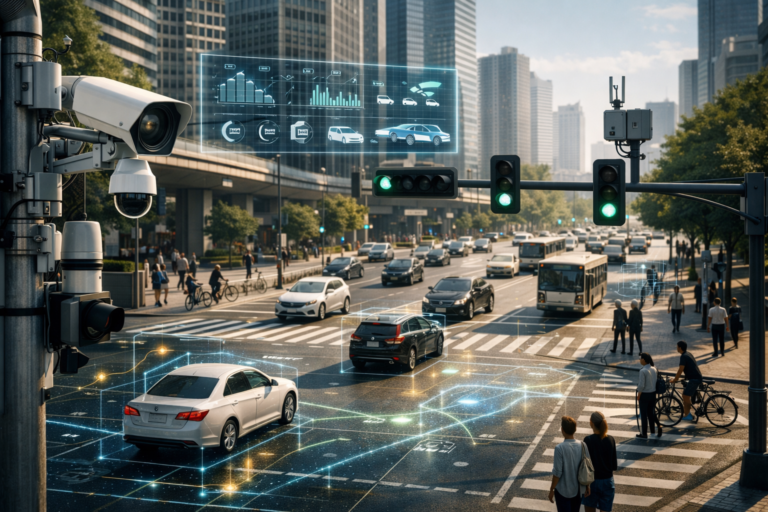
As operating costs rise and enterprises accelerate AI adoption in 2026, organisations across India’s retail and enterprise sectors are increasingly deploying Edge AI video analytics to unlock new business value from existing CCTV infrastructure. What were once security-only systems are now being upgraded with on-premise AI models that deliver real-time insights into customer behaviour, loss prevention, queue management, and operational performance—turning legacy CCTV networks into profit-oriented, data-driven assets without full hardware replacement.
Key Takeaways
- Enterprises are upgrading existing CCTV systems with Edge AI instead of replacing hardware
- Real-time video analytics is being used to improve efficiency, reduce losses, and support new revenue use cases
- On-premise Edge AI reduces reliance on cloud connectivity while supporting privacy, latency, and compliance needs
From Surveillance to Intelligence: A Structural Shift
Traditional CCTV deployments were designed for passive recording and post-incident investigation. Video footage remained largely unused unless a security breach occurred. Today, this model is being disrupted by Edge AI architectures that bring machine intelligence closer to the camera.
By processing video streams locally, Edge AI systems can detect patterns, recognise objects, count people, track movement, and generate alerts in real time. This allows organisations to move beyond security use cases and unlock operational intelligence embedded in everyday video data.
Industries adopting this approach report improvements in loss prevention, customer experience, workforce productivity, and asset optimisation.
Why Edge AI Is the Catalyst
Edge AI differs from cloud-only video analytics in both architecture and business impact. Instead of streaming all footage to central servers, AI inference happens locally—on edge servers or AI-enabled cameras.
This delivers several advantages:
- Lower latency: Real-time decision-making without network delays
- Reduced bandwidth costs: Only insights, not raw video, are transmitted
- Improved data privacy: Sensitive footage remains on-prem
- Operational resilience: Systems continue working even with limited connectivity
As regulatory scrutiny increases around video data and personal information, Edge AI deployments align more closely with data protection and governance expectations.
Turning CCTV into a Profit Engine
Organisations are increasingly using AI video analytics to directly influence revenue and cost efficiency. Common monetisation and optimisation use cases include:
Retail and Commercial Spaces
- Footfall analytics and customer journey mapping
- Queue monitoring to improve conversion rates
- Theft and shrinkage detection
- Heatmap-based layout optimisation
Manufacturing and Warehousing
- Safety compliance monitoring
- Equipment usage and downtime analysis
- Intrusion and restricted-zone detection
Smart Cities and Infrastructure
- Traffic flow optimisation
- Crowd density monitoring
- Incident detection and response automation
Enterprise Campuses
- Attendance and access verification
- Visitor analytics and security orchestration
- Space utilisation insights
By layering AI models on top of existing camera networks, enterprises generate measurable ROI without replacing physical infrastructure.
On-Prem Edge AI and Compliance Readiness
With increasing focus on data sovereignty and privacy regulations, on-prem Edge AI deployments are becoming the preferred model for video intelligence. Processing video locally helps organisations retain control over sensitive data, maintain audit trails, and enforce retention policies.
This is especially relevant in regulated environments where biometric data, facial recognition, or behavioural analytics are involved. On-prem architectures reduce exposure to cross-border data transfer risks and support internal governance frameworks.
Market Momentum and Industry Adoption
Industry analysts report growing enterprise investment in Edge AI video analytics as organisations look to extract value from existing assets rather than deploy entirely new systems. The convergence of affordable AI accelerators, mature computer vision models, and scalable edge platforms has lowered the barrier to adoption.
As a result, CCTV is evolving from a passive recording tool into a core digital infrastructure layer that informs decision-making across operations, security, and customer experience.
The Road Ahead
The future of video infrastructure lies in intelligent, distributed systems that combine AI, edge computing, and domain-specific models. Enterprises that modernise legacy CCTV today are positioning themselves to capture long-term value from real-world data streams.
As Edge AI adoption accelerates in 2026 and beyond, CCTV networks will increasingly function as profit engines—driving efficiency, compliance, and competitive advantage across industries.
FAQs
No. While valuable for big box retail, high-value boutiques (jewelry, electronics) see the fastest ROI due to the high cost of a single theft or lost sale.
It augments them. Instead of staring at screens, guards become “Response Officers,” reacting only when the AI flags an event.
We track three metrics: Reduction in Shrinkage (Value), Increase in Conversion (Revenue), and Staff Efficiency (Cost). Most clients see ROI in 6-9 months.
Yes. Correlating timestamped POS data with video events is the “Holy Grail” of loss prevention (e.g., detecting items passed without scanning).
Rarely. IndoAi is camera-agnostic. If your existing IP cameras have decent resolution (2MP+), we can apply intelligence to them.
A compact Edge AI processing unit (Server/Box) that connects to your NVR/Switch.
The system is On-Premise. It continues to analyze, record, and alert locally. Syncing to the central dashboard happens when connectivity returns.
Our models achieve 95-98% accuracy, filtering out carts, children, and shadows, which is significantly higher than old-school infrared beam counters
Standard Retail AI focuses on behavior (posture, movement, dwelling), not identity. We do not need to know who the person is, only
Since video processing happens locally and doesn’t constantly stream to a third-party cloud, your data exposure is minimized.
Yes. You can deploy the hardware for just “People Counting” today and switch on “Theft Detection” software licenses next quarter.
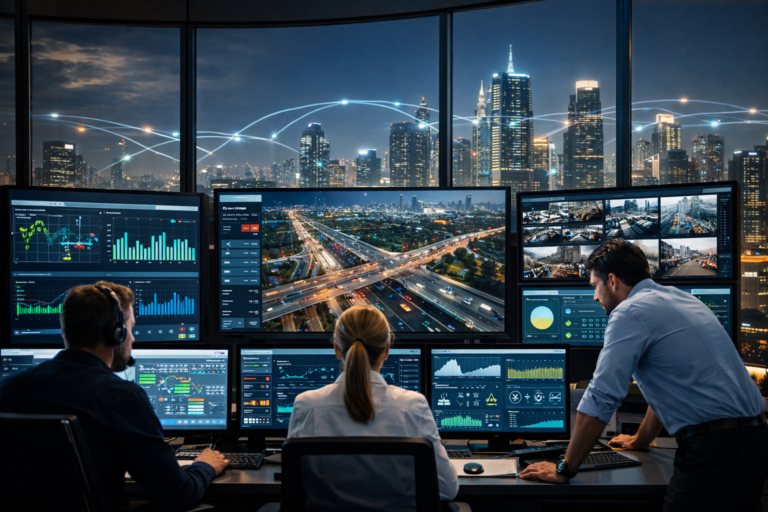
IndoAi provides a “Central Command” dashboard. You get a macro view of all stores but can drill down to a specific camera in a specific store instantly.